
In New Jersey, permitting rules governing development in floodplains and environmentally sensitive areas continue to shift. The New Jersey Department of Environmental Protection (NJDEP) recently announced that it would postpone full implementation of its Resilient Environments and Landscapes (REAL) rules, a series of changes to NJDEP permitting and statewide coastal zone, flood hazard, wetlands, and stormwater management regulations. The REAL rules were formally adopted on Jan. 20, 2026, with new coastal floodplain development standards at their core. REAL increased the base flood elevation for new coastal development by four feet, which the state identified as necessary to fortify newly constructed assets against increasing coastal hazards, including sea-level rise, erosion, and tidal storm surge. Other elements of the REAL rules carry wider statewide implications, affecting stormwater control requirements and the availability of waivers from strict compliance, among other things.

With new gubernatorial priorities driving efficiency-focused initiatives in Trenton, NJDEP announced its intent to evaluate targeted amendments to REAL that could support streamlined permit reviews while “still serving the rules’ critical goals.” To allow time to consider possible efficiency amendments, NJDEP proposed a separate rule that would extend a key July 20, 2026, deadline for projects to qualify for “legacy” status. If adopted, this would enable NJDEP to permit a project designed to standards that predate the REAL rules for an additional year. A REAL legacy status extension might offer a timing reprieve in some permitting context, but may also introduce regulatory uncertainty in project planning and real estate transactions involving New Jersey property.

Evolving Floodplain and Stormwater Regulations

Floodplains throughout New Jersey have been, and can continue to be, developed safely and committed to productive land uses. Bounded by the ocean and major rivers, and dissected by smaller interior waterways, approximately 16% of New Jersey lies within a floodplain mapped by the Federal Emergency Management Agency (FEMA), where development is regulated by NJDEP under the state Flood Hazard Area Control Act and related statutes and regulations. NJDEP studies floodplains, sets minimum design standards for floodplain development, evaluates development applications, and issues required permits. Commercial, residential, industrial, or public development proposed in a coastal or riverine flood hazard area (FHA) must comply with NJDEP regulations. Because flood risks are dynamic and influenced by various factors, FHA regulations are periodically updated to adjust the boundaries of regulated areas and the design standards applied to protect property, public safety, and the environment.

Between early 2018 and 2026, an iterative process of scientific evaluation, stakeholder outreach, and public engagement led NJDEP to amend the FHA regulations in view of increasing incidents of actual flooding and projections of future flood risk not previously included in FHA design standards. Since their inception, the FHA regulations had been informed by purely historical data underlying flood zone mapping published by FEMA. For New Jersey, only historical data through the year 2000 is included, meaning that neither current nor future data is reflected in the values informing design standards. To address these gaps and encourage future-focused floodplain development standards informed by risks associated with climate change, NJDEP proposed and adopted FHA rule amendments incorporating current state-level data and moderate projections of increasing precipitation affecting the entire state, as well as sea-level rise affecting New Jersey’s large coastal zone.

Inland Floodplain Development Regulation

Using this future-focused approach, regulations governing new development in New Jersey’s inland riverine floodplains were amended through the NJDEP Inland Flood Protection Ruleinitially proposed in December 2022 and formally adopted in July 2023. The rule increased the jurisdictional area and amended design standards for new construction and reconstruction in areas prone to flooding associated with rivers, streams, and tributaries. Among the changes were updated requirements for new development in inland floodplains to be designed and constructed at least two feet above the FEMA base flood elevation (FEMA+2). The measure also updated the statewide Stormwater Management Rule by requiring that stormwater management systems be designed to account for increases in the quantity and intensity of rainfall in New Jersey, which now varies by county.

Coastal Floodplain Development Regulation

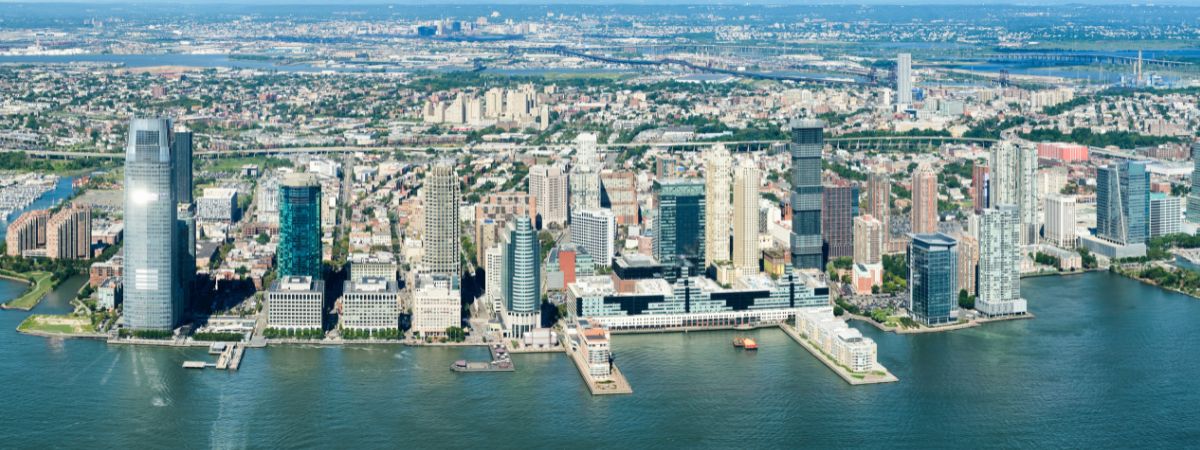
Revisions to regulations governing New Jersey’s coastal zone followed as part of NJDEP’s REAL reform, first proposed in August 2024, revised in August 2025, and formally adopted in January 2026. REAL increased the jurisdictional area and amended design standards for new construction and reconstruction in areas prone to tidal flooding and storm surge. The rules now require that new development in coastal floodplains be designed and constructed at least four feet above the FEMA base flood elevation (FEMA+4) to account for a moderate level of incremental sea-level rise and associated storm surge projected to affect coastal New Jersey. Coastal areas include urban centers situated along tidally influenced rivers, not only the Jersey Shore communities along the state’s Atlantic Coast.

REAL Statewide Implications

While regulatory design standards for coastal floodplains are a central component of REAL, the rules include a series of other changes to New Jersey’s interconnected scheme of environmental land use regulations, including other of the Flood Hazard Area Control Act rules (N.J.A.C. 7:13), Coastal Zone Management rules (N.J.A.C. 7:7), Freshwater Wetlands Protection Act rules (N.J.A.C. 7:7A), and the Stormwater Management rules (N.J.A.C. 7:8). Some of these changes have statewide impact outside of New Jersey’s large coastal zone. Among the most notable changes are:

  • Addition of climate risk analyses and potential mitigation measures for residential and critical structures at greatest risk of inundation from long-term sea-level rise;
  • A broader definition of “major development” that requires full application of stormwater management requirements, including for redevelopment projects previously exempt from some stormwater controls;
  • Prioritization of nature-based engineering solutions, such as living shorelines, wetlands and marsh restoration, and beneficial reuse of dredged materials;
  • Clarifications to the availability of waivers and exceptions for eligible projects and circumstances; and
  • Streamlining of permit types to support online permitting and, where applicable, self-certification where formal permit applications are not required.

REAL Implementation Delays

As originally proposed in 2024, the new standards would have been immediately effective had REAL been fully adopted as planned in August 2025. However, NJDEP proposed substantial changes to elements of REAL that, pursuant to the New Jersey Administrative Procedure Act, extended adoption of REAL to January 2026. Among the 2025 changes were a one-foot reduction in the originally proposed Climate Adjusted Flood Elevation, additional provisions to promote regulatory flexibility, and a legacy status provision intended to insulate projects in the pipeline from a midstream change in regulatory design standards.

The introduction of legacy status in REAL was and remains important because NJDEP must apply the regulatory standards in effect at the time of a decision. This provision enabled NJDEP to permit projects designed to standards that predate the REAL rules if complete NJDEP applications were submitted by July 20, 2026, six months after the adoption of REAL. On June 1, 2026, NJDEP proposed a rule that would extend the legacy status deadline by an additional year, to July 20, 2027. This extension has not yet been codified in NJDEP regulations, which raises potential legal and practical concerns given the time of decision rule. To bridge this gap, NJDEP has issued legacy guidance reflecting its intent to afford REAL legacy status to eligible applications received after the July 20, 2026 deadline.

The Future of REAL

In early July 2026, NJDEP announced that it would reconvene stakeholders to “evaluat[e] the adopted REAL rules to identify whether targeted amendments may allow for streamlined or simplified permit reviews, while still serving the rules’ critical goals.” The agency has since organized a closed workgroup comprised of representatives of five trade organizations, three environmental nonprofits, and a regional planning organization. The workgroup will meet through early fall 2026 to advise NJDEP on potential REAL amendments. Details on potential changes under consideration have not been made public. NJDEP would typically conduct informational sessions accessible to the general public prior to another formal rulemaking that may alter the REAL rules. However, a tight rulemaking calendar administered by the state Office of Administrative Law might limit the scope of NJDEP’s typical pre-proposal public engagement. Those affected by REAL should monitor NJDEP developments to stay informed.

Key Takeaways

Floodplain development, stormwater, and land resource protection rules and regulations that inform the design, permitting, and construction of projects in New Jersey remain in a continuing state of flux. Project developers, property owners, and prospective purchasers contemplating NJDEP permits or related transactions should consider the effect of the recently amended NJDEP rules, including REAL, which may vary depending on property and project type, location, and specifications. For projects in their design phase, recent NJDEP actions may introduce a degree of regulatory uncertainty that could prompt reconsideration of permitting pathways.

For projects that are fully designed and prepared to seek NJDEP permits, applicants should evaluate their REAL legacy status eligibility and assess how to achieve regulatory compliance and under which standards. Projects subject to heightened public attention, including digital infrastructure and industrial development, may face additional scrutiny and third-party challenges during the permitting process. In transactions involving New Jersey assets and real estate, market participants should assess the applicability of shifting NJDEP rules on existing and planned asset uses, particularly when formulating new development, redevelopment, or facility expansion goals.

Print:
Email this postTweet this postLike this postShare this post on LinkedIn
Photo of Shawn Latourette Shawn Latourette

Shawn M. LaTourette is an environmental lawyer, litigator, strategist, and former government official who enables clients across industries to deliver major projects, navigate complex disputes, manage risk, respond to crises, and pursue their development and sustainability goals. Previously the top environmental official in

Shawn M. LaTourette is an environmental lawyer, litigator, strategist, and former government official who enables clients across industries to deliver major projects, navigate complex disputes, manage risk, respond to crises, and pursue their development and sustainability goals. Previously the top environmental official in New Jersey, Shawn served as Commissioner of the Department of Environmental Protection (NJDEP), one of the most active regulatory and natural resource management agencies in the United States. A recognized national leader, Shawn has been at the forefront of legal, regulatory, and public policy developments that inform how companies do business and shape how communities grow and thrive.

Shawn focuses his practice on environmental and natural resource issues in regulatory, transactional, litigation, and policy settings. He represents a wide array of businesses, institutional investors, and quasi-governmental entities with projects and interests across the infrastructure, transportation, energy, real estate, chemicals, engineering, pharmaceutical, and manufacturing industries. Drawing upon private and public sector experience, Shawn equips clients with comprehensive permitting strategies necessary to de-risk and deliver major projects; represents clients in their most critical environmental investigations, compliance, and enforcement actions; and provides clients with strategic, legal, and policy advice in their internal affairs and throughout their engagements with regulators and other market participants. Shawn handles permitting and regulatory proceedings before state and federal agencies, provides environmental counsel essential to commercial and financial transactions, and litigates complex environmental, natural resource damage, and related matters from initial investigation through trial and appeal.

As Commissioner, Shawn led the implementation of new environmental laws, developed novel regulatory schemes, built permitting and enforcement programs, and established policies that continue to define environmental governance in New Jersey and inform action by other state and federal agencies. Throughout his tenure, Shawn worked at the intersection of economic development and natural resource stewardship to deploy a historic $6.7B+ investment in environmental infrastructure, recovered $3.2B+ in pollution abatement through strategic enforcement initiatives, and developed nation-leading regulatory reforms to address PFAS and emerging contaminants in drinking water and environmental media, modernize flood safety standards, assess cumulative impacts in communities with environmental justice concerns, accelerate brownfield remediation and redevelopment, expedite permitting processes, and improve environmental quality outcomes while advancing economic growth.

An experienced litigator, Shawn has been involved in some of the most consequential environmental cases before New Jersey state and federal courts over the last twenty years. Early in his career, Shawn and his colleagues successfully defended the first natural resource damage case to reach trial in the nation. Most recently, as a government agency executive and in-house counsel, Shawn directed an affirmative litigation strategy that resulted in multiple landmark environmental settlements. His results included the largest settlement ever achieved by a single U.S. state, which resolved complex multibillion-dollar claims concerning PFAS ‘forever chemicals,’ providing certainty for public entity claimants, responsible parties, and their corporate successors.

Shawn’s clients rely upon his deep understanding of governmental decision-making, the laws and policies that drive enforcement, the settlement frameworks necessary to resolve complex matters, and the dynamics that move projects, cases, and transactions forward. For those with environmental regulatory and litigation needs in New Jersey, Shawn’s knowledge and capabilities have been key to achieving his clients’ business goals and meeting their compliance obligations. His leading role in shaping New Jersey’s environmental regulatory framework, directing enforcement programs, and determining administrative appeals makes Shawn an unmatched resource. For clients with federal or multi-jurisdictional interests, his leadership of one of the nation’s most consequential state environmental agencies has enabled his deep engagement in federal environmental policy and sustained relationships with regulators across the country. A recognized national voice on environmental, energy, natural resource, climate, and sustainability issues, Shawn brings crucial perspective to clients with interests in New Jersey and beyond.

Beyond his practice, Shawn serves on multiple Boards and as an Adjunct Professor of Law at Rutgers Law School, where he developed and teaches courses on Environmental Justice and Climate Change Law and Policy. Shawn earned his law degree summa cum laude from Rutgers Law School, where he was class salutatorian, and his undergraduate degree magna cum laude from Rutgers University. Prior to his government leadership, Shawn was an environmental law and litigation partner at a northeast regional Am Law 200 firm.

Photo of Steven C. Russo Steven C. Russo

Steven C. Russo co-chairs the Environmental Practice and chairs the firm’s New York Environmental Practice. He focuses his practice on environmental law and litigation, permitting, National Environmental Policy Act (NEPA), State Environmental Quality Review Act (SEQRA) review, energy project siting, renewable energy, Brownfields…

Steven C. Russo co-chairs the Environmental Practice and chairs the firm’s New York Environmental Practice. He focuses his practice on environmental law and litigation, permitting, National Environmental Policy Act (NEPA), State Environmental Quality Review Act (SEQRA) review, energy project siting, renewable energy, Brownfields redevelopment, toxic tort litigation, including emerging contaminants, environmental crimes, government law and policy, environmental due diligence and risk management, and the environmental components of land use and real estate law. Steven is equally experienced litigating in federal and state courts, as well as counseling his clients with regard to the development of major industrial, energy and residential development projects.

Prior to joining the firm, Steven was the Chief Legal Officer of the New York State Department of Environmental Conservation. There, he supervised approximately 90 attorneys in Albany, as well as the agency’s nine regional offices. He also supervised the agency’s legislative affairs department and Office of Environmental Justice. At the agency, Steven initiated a reform of the state’s environmental impact review regulations and assessment forms, completed the issuance of new power plant siting regulations pertaining to environmental justice and carbon emissions, and revised the agency’s environmental audit policy.

Photo of Paul R. McIntyre Paul R. McIntyre

Paul R. McIntyre is a Shareholder in the firm’s Environmental Practice. He represents leading private equity funds, institutional investors, and real estate developers and managers in the identification, evaluation, and mitigation of environmental risks and liabilities. Primarily a transactional attorney, Paul possesses a

Paul R. McIntyre is a Shareholder in the firm’s Environmental Practice. He represents leading private equity funds, institutional investors, and real estate developers and managers in the identification, evaluation, and mitigation of environmental risks and liabilities. Primarily a transactional attorney, Paul possesses a reputation for helping to craft practical, business-oriented insights that help mitigate risk and enabling deals to close.

Paul represents clients in the acquisition, development, financing, and sale of commercial real estate. He also provides clients with environmental counseling in corporate mergers and acquisitions, and similar business transactions. Paul has worked on the environmental aspects of more than 1,000 deals during his career, and is known for being a responsive, professional, and courteous practitioner. He regularly advises clients as to the practical and potential impacts of environmental conditions on site development plans, financing terms, and exit sales. His work involves:

  • Assisting clients in developing environmental diligence, regulatory compliance, and remediation strategies and protocols.
  • Engaging project-specialized consultants and contractors on behalf of clients under preferred terms.
  • Drafting and negotiating environmental provisions in service contracts, purchase & sale agreements, and loan documents.
  • Navigating state and federal cleanup programs to obtain regulatory closure and releases of liability.
  • Placing environmental insurance to help secure environmental obligations and mitigate potential risks.

While rooted in Philadelphia, Paul’s practice is multi-jurisdictional and global in scope, supporting clients acquiring, operating, and selling property and facilities across U.S. gateway markets. He also regularly assists clients conducting environmental diligence in support of the acquisition of commercial property and operating industrial facilities in the United Kingdom, European Union, and Asia. Paul’s work also extends to climate risk assessments and corporate environmental, social, and governance (ESG) in corporate transactional matters.

Paul frequently presents at seminars and conferences on environmental topics pertaining to environmental diligence, remediation strategies, and environmental insurance.

Photo of David Freylikhman David Freylikhman

David Freylikhman focuses his practice on complex real estate transactions in New Jersey, New York, nationally, and internationally. David advises property owners and operators, family offices, funds, and sponsors on acquisitions, dispositions, secured financing, CPACE financing, assemblages, and transactions involving 1031 exchanges and…

David Freylikhman focuses his practice on complex real estate transactions in New Jersey, New York, nationally, and internationally. David advises property owners and operators, family offices, funds, and sponsors on acquisitions, dispositions, secured financing, CPACE financing, assemblages, and transactions involving 1031 exchanges and multistate portfolios. David’s practice involves all major real estate asset classes, including office, industrial, retail, multi-family, and mixed-use property.

David is a former adjunct professor at New York Law School and Seton Hall School of Law and has authored the Chambers New Jersey Guide to Real Estate each year since 2019. David is a Fellow of the American College of Real Estate Attorneys and is a frequent speaker at national and regional conferences.

Photo of Jeshica Patel Jeshica Patel

Jeshica Patel focuses her practice on government, law, and policy matters with a focus on New York State environmental and energy issues. She has deep experience representing government agencies and authorities on environmental, energy, and agriculture matters, and coordinating legal affairs for state…

Jeshica Patel focuses her practice on government, law, and policy matters with a focus on New York State environmental and energy issues. She has deep experience representing government agencies and authorities on environmental, energy, and agriculture matters, and coordinating legal affairs for state agencies including the Department of Environmental Conservation, Office of Parks, Recreation and Historic Preservation, Department of Agriculture and Markets, Department of Public Service, Office of Renewable Energy Siting, New York Power Authority, and New York State Energy Research and Development Authority.

Prior to joining Greenberg Traurig, Jeshica served as assistant counsel to Governor Kathy Hochul for Energy, Environment, and Agriculture in the New York State Executive Chamber.