
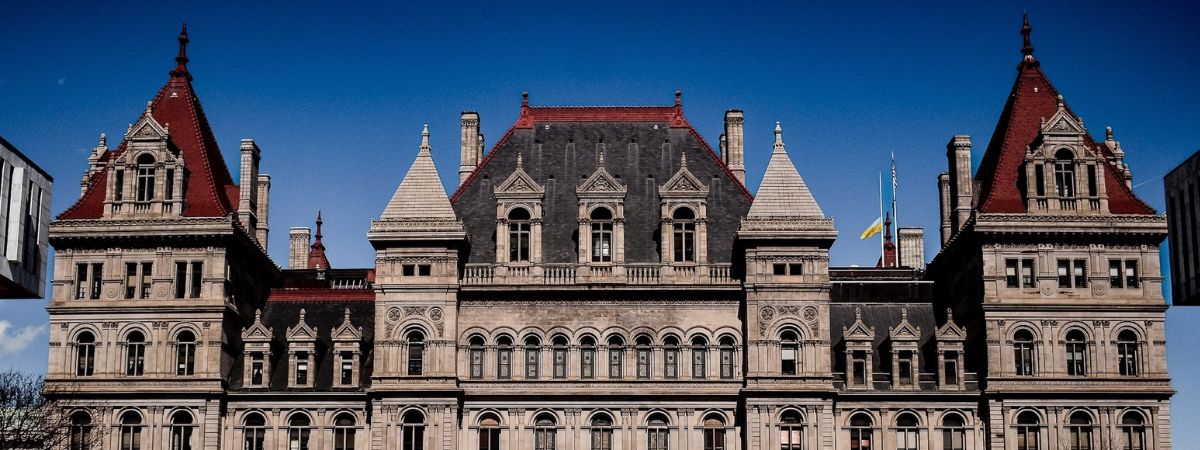
In her proposed FY 2026-2027 Budget for New York, Gov. Kathy Hochul proposed reforms to the state’s Environmental Quality Review Act (SEQRA) aimed at accelerating housing, infrastructure, and redevelopment projects by imposing strict timelines and expanding exemptions for certain developments. These amendments come on the heels of California’s recent amendments to the California Environmental Quality Act and follow federal changes to implementation of the National Environmental Policy Act, aimed at streamlining permitting processes.
The New York State Senate and Assembly had differing responses to the Gov. Hochul’s proposals throughout the budget negotiations. The state Senate advanced a narrowed version of the governor’s SEQRA reform package, while the state Assembly declined to include a corresponding counterproposal in its one-house budget proposal.
However, the final SEQRA reforms in the enacted budget closely follow Gov. Hochul’s original proposal while also incorporating some language advanced by the Senate. The adopted provisions will:
- Exempt new housing from SEQRA review, with the goal of reducing costs and speeding up construction. In New York City, exemptions apply to projects of up to 500 units in higher-density zoning districts and up to 250 units elsewhere. Outside of NYC, exemptions cover up to 300 units in urbanized areas, 100 units in non-urban areas, and 20 units in unzoned areas. The legislation stipulates that all eligible housing must be built on previously disturbed land and connected to existing water and sewer systems at occupancy. Eligible housing must not be built in an exclusively industrial zone.
- Extend SEQRA exemptions to other projects, including in-kind replacement or rehabilitation of municipal water and wastewater infrastructure; replacement or upgrade of small community water systems; sewer service to disadvantaged communities with inadequate treatment systems; public parks (excluding stadiums and mass gathering venues); multi-use bicycle and pedestrian trails; green infrastructure retrofits of existing structures; and NYC public school construction for purposes of meeting class size compliance targets.
- Establish procedural deadlines to accelerate decision-making: agencies must determine whether an action qualifies for exemption within 120 days of application, and applicants may seek court relief if agencies fail to act. Further, if an Environmental Impact Statement (EIS) is required, the initial determination must be made within one year of designating the lead agency. The amendments establish a maximum two-year window to finalize the EIS once the process is triggered. Extensions will be limited to additional time necessitated by applicant-driven project changes after scoping; the applicant’s failure to provide necessary information requested by the lead agency; or other circumstances that were unforeseeable during the EIS scoping process.
- Preserve without limitation all other applicable regulatory requirements, including historic preservation laws, protections for disadvantaged communities, wetlands, endangered species, air and water quality, stormwater management, and municipal zoning and land use authority including site plan review, traffic studies, and water and wastewater capacity determinations.
The SEQRA reforms represent a significant step toward accelerating housing production and infrastructure development in New York by reducing the scope and duration of environmental review under SEQRA for certain projects. Simultaneously, the legislation preserves a broad range of other environmental, historic preservation, and land use review requirements, leaving a SEQRA exemption as one important but not exclusive component of the overall regulatory landscape for the newly excluded projects.
Moving forward, the New York State Department of Environmental Conservation may choose to promulgate implementing regulations or issue guidance to clarify certain provisions. Until the agency issues such regulatory guidance, stakeholders and applicants should consider exercising caution when applying SEQRA’s new provisions to specific projects.
*Special thanks to Legislative Specialist Olivia Sheffer for contributing to this GT Blog.