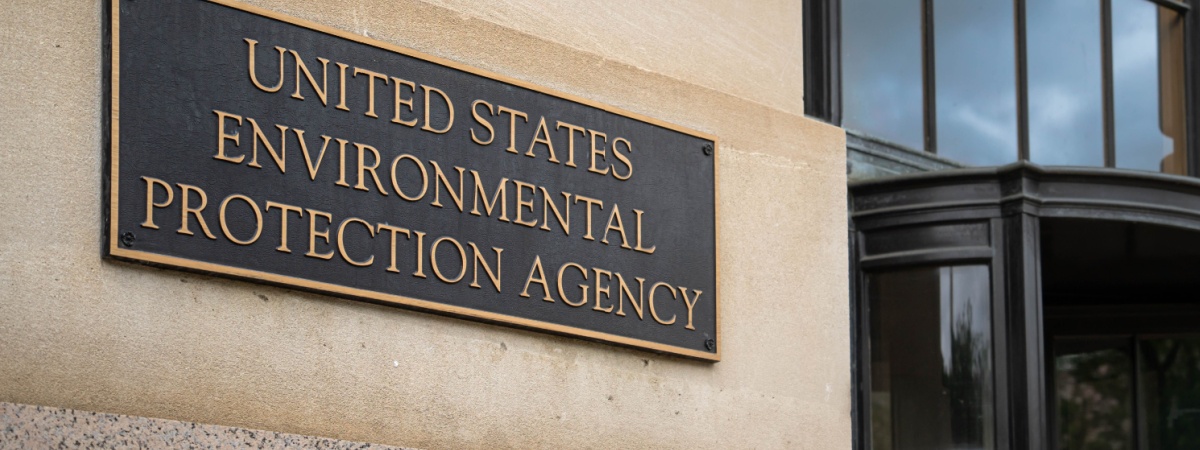
On Aug. 1, 2025, the U.S. Environmental Protection Agency (EPA) initiated a major climate policy shift by proposing to rescind its 2009 Endangerment Finding, which has been the basis of many regulatory efforts to reduce greenhouse gas emissions from both mobile and stationary sources. The proposed rule, Reconsideration of 2009 Endangerment Finding and Greenhouse Gas Vehicle Standards, 90 Fed. Reg. 36288 (Aug. 1., 2025) (Reconsideration Proposal), also seeks to rescind all greenhouse gas emission standards for light-duty, medium duty, and heavy-duty vehicles and engines promulgated under section 202(a) of the Clean Air Act (CAA) and based on the Endangerment Finding. While the Reconsideration Proposal explicitly seeks to repeal existing vehicle emission standards, EPA signaled potential changes for other industries reliant on the Endangerment Finding, including oil and gas, power plants, and aircraft engine manufacturers. As the Agency re-examines its authority and the scientific basis for regulating greenhouse gases, businesses and policymakers should prepare for changes in regulatory direction and policy uncertainty.

Click here to read the full GT Alert.

Print:
Email this postTweet this postLike this postShare this post on LinkedIn
Photo of Eric Waeckerlin Eric Waeckerlin

Eric Waeckerlin is a trusted advisor to leading energy, oil and gas, mining, manufacturing, and industrial companies on their most complex and consequential environmental and natural resources matters. He counsels clients through high-stakes regulatory, permitting, enforcement, and policy challenges at the intersection of

Eric Waeckerlin is a trusted advisor to leading energy, oil and gas, mining, manufacturing, and industrial companies on their most complex and consequential environmental and natural resources matters. He counsels clients through high-stakes regulatory, permitting, enforcement, and policy challenges at the intersection of major project development, air quality, and climate strategy, with a practice designed to support executive decision-making and enterprise-level risk management.

Eric is nationally recognized for his deep skills navigating the federal Clean Air Act (CAA) and its state analogues, and he routinely advises on permitting, compliance, and enforcement matters affecting large-scale conventional and low-carbon energy projects. His experience spans the full lifecycle of major projects—from early siting and permitting strategy through construction, operation, and defense of agency actions—allowing clients to move critical projects forward while managing regulatory, reputational, and financial risk. In addition to the CAA, Eric has substantial experience under the Resource Conservation and Recovery Act (RCRA), Clean Water Act (CWA), Safe Drinking Water Act (SDWA), Comprehensive Environmental Response, Compensation, and Liability Act (CERCLA), and the National Environmental Policy Act (NEPA).

As energy markets evolve, Eric has been at the forefront of advising clients on climate and decarbonization strategies. He counsels companies on domestic and international climate and methane policy, including carbon capture and other CO₂ management regimes, emissions reduction and offset strategies, and participation in carbon and greenhouse gas markets. His work helps clients integrate highly complex regulatory compliance with broader sustainability, investment, and corporate strategy objectives.

In high-stakes litigation and regulatory challenges, Eric has served as lead counsel for national oil and gas trade associations in challenges to federal regulations and has successfully defended oil and natural gas companies in numerous multimillion-dollar air quality enforcement actions brought by the EPA and state agencies. Clients value his ability to combine technical regulatory knowledge with strategic judgment, making him a go-to counselor for executives and management teams navigating the legal risks shaping the future of energy.

Photo of Courtney M. Shephard Courtney M. Shephard

Courtney Shephard guides energy companies through complex regulatory landscapes in the Rocky Mountain West. Her experience spans conventional and low-carbon energy production, with a focus on federal regulatory compliance, permitting strategies, and resolving enforcement matters.

At the core of Courtney’s work is her

Courtney Shephard guides energy companies through complex regulatory landscapes in the Rocky Mountain West. Her experience spans conventional and low-carbon energy production, with a focus on federal regulatory compliance, permitting strategies, and resolving enforcement matters.

At the core of Courtney’s work is her comprehensive approach to environmental compliance. She adeptly maneuvers through complex federal mandates—including NEPA, Clean Air Act, and Endangered Species Act requirements—and handles federal administrative appeals. Her experience includes crafting site-specific development strategies for localized development challenges that with the goal of achieving both environmental protection and development objectives.

Leveraging her background in climate policy analysis, carbon market dynamics, and emissions accounting, Courtney collaborates with clients to develop comprehensive carbon management strategies. Her practice includes methane and CO2 reduction strategies, Class VI storage permitting, and pore space acquisitions. She also represents clients in rulemaking and permitting proceedings before the Colorado Energy & Carbon Management Commission.

Access to adequate water supplies is a common project development challenge in the arid western United States. Courtney has more than a decade of experience working with private and municipal clients to appropriate, buy/sell, change, and protect water rights through private transactions and Colorado water court proceedings.

Courtney’s strategic vision and comprehensive understanding of regulatory frameworks have been instrumental in advancing numerous energy and infrastructure projects throughout the region. Her ability to synthesize complex regulatory requirements with practical business needs make her an asset to clients navigating the ever-changing energy landscape.

Photo of Lauren Hammond Lauren Hammond

Lauren Hammond is an environmental law attorney with nearly a decade of experience managing and enforcing complex regulatory matters under federal and state laws. As a former Senior Clean Air Act attorney for the U.S. Environmental Protection Agency, Lauren counseled, litigated, and negotiated…

Lauren Hammond is an environmental law attorney with nearly a decade of experience managing and enforcing complex regulatory matters under federal and state laws. As a former Senior Clean Air Act attorney for the U.S. Environmental Protection Agency, Lauren counseled, litigated, and negotiated high profile cases under the Clean Air Act, Clean Water Act, and Resource Conservation and Recovery Act.

Lauren has deep experience enforcing and addressing compliance matters with the oil and gas industry across the Mountain West, and on a national scale developing and leading the EPA’s National Enforcement and Compliance Initiative to mitigate air impacts from oil and gas.

Additionally, Lauren advised on numerous New Source Performance Standards for the oil and gas sector and other rulemakings under the Clean Air Act.

Lauren’s government experience also involved work with municipalities and construction companies on water quality issues, air quality issues related to diesel engine defeat device investigations, oil spill cleanup and spill prevention with gasoline distributors, waste cleanup related to oil wastewater disposal facilities, and municipal landfill air quality investigations. Lauren has led more than two dozen enforcement actions and investigations and draws from this breadth of experience to provide effective counsel on a diversity of environmental issues.